Ship Maintenance Checklist for Vessel Layup: 12 Critical Systems
Key Takeaways
- Proper vessel layup maintenance is essential to preserve asset value, reduce repair costs, and ensure smooth reactivation.
- A tailor-made routine maintenance checklist helps address the specific operational and technical needs of each vessel.
- Regular inspections of engines, pumps, safety systems, and deck equipment are critical during ship layup periods, especially in humid maritime environments like Malaysia.
What happens to a vessel when it is temporarily taken out of service—and how can shipowners ensure it remains safe, operationally ready, and protected from deterioration?
In the maritime industry, vessel layup is a strategic process used to reduce operating costs during periods of low demand, maintenance planning, or market uncertainty. However, laying up a vessel does not mean leaving it unattended. Without proper ship maintenance and preservation procedures, idle vessels can quickly suffer from corrosion, equipment degradation, and costly mechanical failures.
This is why a structured and collaborative maintenance programme is critical. A well-planned routine maintenance checklist ensures that critical systems remain protected and operational throughout the layup period.
This article explores the importance of maintenance for laid-up vessels and outlines a comprehensive checklist approach tailored to individual vessel requirements.
Understanding Vessel Layup and Maintenance
Vessel layup refers to temporarily removing a ship from active operation while maintaining it in a controlled condition suitable for future reactivation.
Depending on operational goals, vessels may enter:
- Hot layup
- Warm layup
- Cold layup
Regardless of layup type, ongoing vessel maintenance remains essential to:
- Prevent equipment deterioration
- Maintain safety systems
- Support future recommissioning
👉 Neglecting maintenance during layup can significantly increase future ships repair costs and downtime.
For the broader preservation programme this checklist supports — including humidity control and corrosion prevention — see ISC’s ship preservation programme.
Why Routine Maintenance Is Critical for Laid-Up Vessels
Even while idle, ships remain exposed to:
- Saltwater corrosion
- Humidity and condensation
- Mechanical degradation
- Electrical system deterioration
Regular maintenance helps:
- Protect critical machinery
- Reduce long-term repair costs
- Maintain class and insurance compliance
- Ensure operational readiness
According to maritime guidelines, structured inspections and preservation routines are necessary to keep laid-up vessels safe and cost-efficient.
Tailor-Made Ship Maintenance Checklist for Vessel Layup
No two vessels are exactly alike. Different ship types, operational histories, and layup durations require different maintenance approaches.
A tailor-made routine maintenance checklist is typically developed collaboratively between:
- Ship management teams
- Vessel crew
- Marine engineers
- Layup service providers
👉 This customised approach ensures that maintenance activities align with the vessel’s technical condition and operational requirements.
Key Areas Covered in Routine Vessel Layup Maintenance
1. Main Engine Inspection and Preservation
The main engine is one of the most critical systems onboard and requires continuous preservation during layup.
Routine Tasks:
- Lubrication checks and circulation
- Periodic turning of the engine
- Inspection for corrosion or moisture buildup
- Preservation oil monitoring
Why It Matters:
Idle engines are highly vulnerable to:
- Internal corrosion
- Lubrication breakdown
- Seal deterioration
👉 Regular preservation helps avoid major engine damage and costly reactivation repairs.
2. Diesel Generator Maintenance
Diesel generators support essential onboard power systems during layup.
Maintenance Checklist:
- Fuel system inspection
- Battery and electrical checks
- Lubrication monitoring
- Periodic test runs
Key Objective:
Ensure generators remain operational for:
- Emergency systems
- Monitoring equipment
- Essential onboard functions
3. Boiler Inspection and Maintenance
Boilers require proper preservation even when inactive.
Common Maintenance Activities:
- Internal cleaning and drying
- Corrosion inhibitor application
- Pressure and valve inspections
- Water treatment monitoring
👉 Poor boiler preservation can lead to severe corrosion and expensive repairs.
4. Motors and Pumps Inspection
Various motors and pumps onboard remain vulnerable during vessel layup.
Systems Commonly Checked:
- Cooling pumps
- Bilge pumps
- Fuel transfer pumps
- Hydraulic systems
Routine Tasks:
- Shaft rotation
- Lubrication checks
- Seal inspections
- Electrical testing
👉 Periodic operation helps prevent seizure and mechanical failure.
5. Steering Gear Maintenance
Steering systems must remain operational for safety and future reactivation.
Checklist Includes:
- Hydraulic oil inspection
- Steering gear movement tests
- Leakage checks
- Electrical control verification
👉 Functional steering systems are critical for emergency readiness.
6. Emergency Fire Pump Inspection
Fire protection systems must remain operational throughout layup.
Routine Checks:
- Fire pump operational testing
- Valve inspection
- Pipework condition assessment
- Emergency power verification
👉 Safety systems are essential for protecting both vessel and crew.
7. Emergency Diesel Generator Maintenance
Emergency generators provide backup power in critical situations.
Maintenance Tasks:
- Battery charging checks
- Fuel quality monitoring
- Test operations
- Alarm system verification
👉 These systems must remain ready for immediate activation.
8. Emergency Air Compressor Checks
Air compressors support several onboard systems.
Key Maintenance Activities:
- Pressure testing
- Lubrication checks
- Drain moisture removal
- Hose and fitting inspections
👉 Moisture buildup can damage compressor systems during inactivity.
9. General Engine Room Inspections
The engine room requires ongoing monitoring even during layup.
Inspection Scope:
- Leakage detection
- Ventilation condition
- Corrosion monitoring
- Cleanliness and housekeeping
👉 A well-maintained engine room reduces operational risks and improves safety.
10. Sounding and Tank Monitoring
Tank inspections are critical for maintaining vessel stability and safety.
Common Checks:
- Ballast tank sounding
- Fuel and water tank inspections
- Leakage detection
- Corrosion assessment
Proper tank monitoring supports:
- Vessel stability
- Pollution prevention
- Structural protection
11. Deck Maintenance and Corrosion Prevention
Deck areas remain exposed to harsh marine conditions during layup.
Routine Maintenance:
- Corrosion inspection
- Protective coating checks
- Drainage clearing
- Surface cleaning
👉 Preventive deck maintenance reduces long-term structural deterioration.
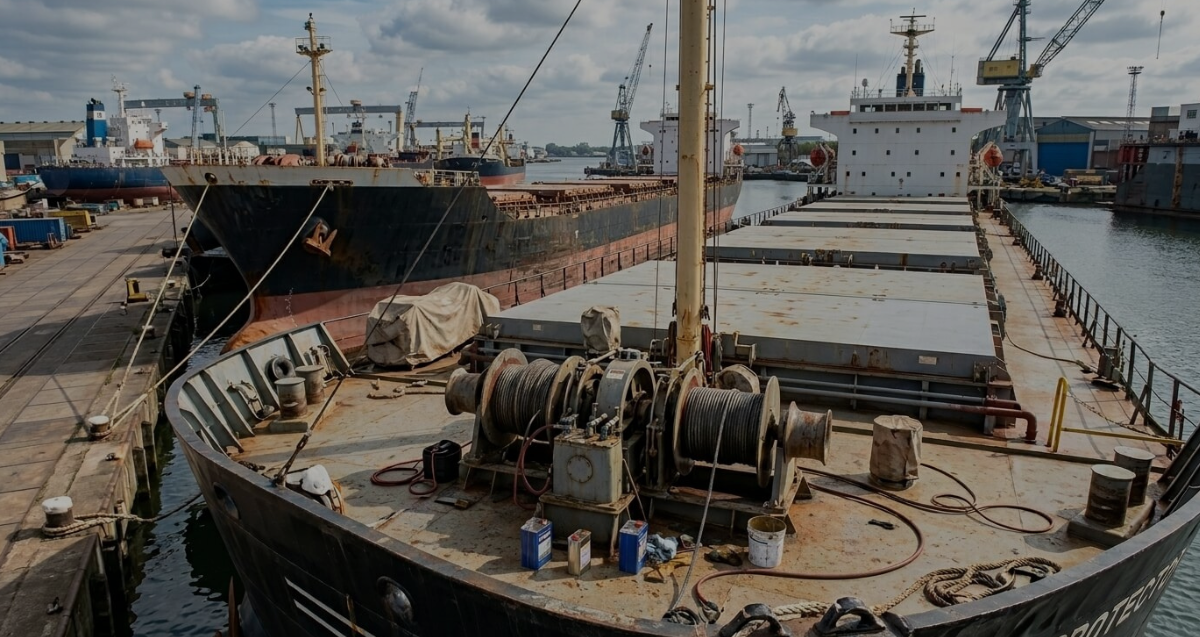
12. Anchor Windlass and Mooring Equipment Checks
Laid-up vessels still rely on secure mooring systems.
Inspection Checklist:
- Windlass operational testing
- Anchor chain condition
- Mooring line inspections
- Lubrication of moving parts
👉 Proper mooring maintenance is essential for vessel safety during layup.
Summary Ship Maintenance Checklist
System | Key Maintenance Focus |
Main Engine | Lubrication, corrosion prevention |
Diesel Generators | Test runs, battery checks |
Boilers | Cleaning, preservation |
Pumps & Motors | Rotation, lubrication |
Steering Gear | Hydraulic and movement tests |
Fire Protection | Pump and system inspections |
Deck Areas | Corrosion and coating checks |
Mooring Systems | Windlass and chain inspection |
Importance of Collaborative Maintenance Planning
A collaborative maintenance approach ensures:
- Vessel-specific maintenance priorities
- Efficient resource allocation
- Better preservation outcomes
This tailor-made checklist strategy allows maintenance scopes to be adjusted based on:
- Vessel age
- Layup duration
- Operating environment
- Future deployment plans
👉 Flexibility is essential for effective vessel maintenance during layup.
Environmental Considerations in Malaysia
Malaysia’s tropical climate creates additional maintenance challenges during vessel layup.
Key Risks:
- High humidity
- Saltwater corrosion
- Heavy rainfall
- Marine growth
Preventive Measures:
- Dehumidification systems
- Frequent inspections
- Corrosion protection programmes
Malaysia’s sheltered maritime areas such as Labuan and Brunei Bay are commonly used for layup operations due to their relatively stable environmental conditions.
Best Practices for Effective Ship Layup Maintenance
Maintain Detailed Records
Documentation should include:
- Inspection reports
- Maintenance logs
- Preservation procedures
- Equipment status updates
👉 Proper records simplify future reactivation.
Conduct Regular Inspections
Even inactive vessels require:
- Scheduled inspections
- Safety checks
- Monitoring of critical systems
Plan for Reactivation Early
Effective maintenance during layup reduces:
- Reactivation costs
- Downtime
- Unexpected repairs
Common Mistakes to Avoid
Mistake | Potential Impact |
Skipping inspections | Undetected equipment failure |
Poor corrosion control | Structural damage |
Inadequate documentation | Reactivation delays |
Neglecting safety systems | Increased operational risk |
👉 Preventive maintenance is significantly more cost-effective than major repairs.
Conclusion: Protecting Vessel Value Through Proper Maintenance
A laid-up vessel still requires active management and structured maintenance to remain safe, compliant, and operationally ready.
By implementing a tailor-made routine maintenance checklist, shipowners can:
- Protect critical equipment
- Minimise long-term repair costs
- Extend vessel lifespan
- Ensure smoother recommissioning
In today’s maritime industry, effective ship maintenance during layup is not simply an operational requirement—it is a strategic investment in long-term asset protection.
Looking for Professional Vessel Layup Maintenance Support?
If your vessel is entering a layup period, implementing a structured and customised maintenance programme is essential.
Work with experienced marine maintenance professionals to develop a vessel-specific checklist covering critical systems, inspections, preservation measures, and operational readiness—ensuring your ship remains protected throughout the layup period.
ABOUT US
OUR SERVICES
Careers