Ship Maintenance: What It Involves and Why It Matters During Lay-Up
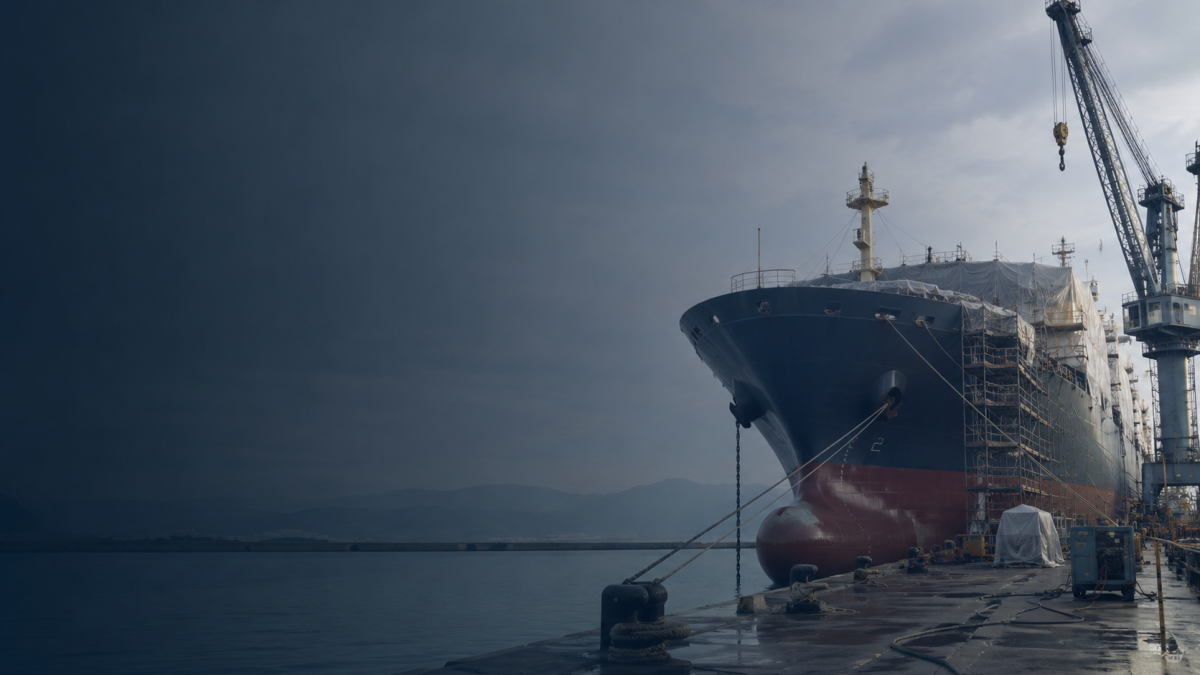
Every vessel depends on regular maintenance to remain safe, reliable and operational. Engines, pumps, electrical systems, deck machinery, hull structures and safety equipment are continuously exposed to mechanical wear, saltwater, humidity and corrosion.
These risks do not disappear when a vessel stops sailing.
In fact, ship maintenance becomes particularly important during vessel lay-up because machinery and systems may remain inactive for extended periods. Without proper inspection, maintenance and preservation, corrosion can develop, components can seize and previously minor defects can become costly problems by the time the vessel is reactivated.
Understanding what ship maintenance involves — and how requirements change when a vessel enters lay-up — can help shipowners protect vessel condition, control maintenance costs and prepare for smoother reactivation.
Key Takeaways
Ship maintenance covers the inspections, servicing, repairs and technical work required to keep a vessel and its equipment in suitable condition.
Maintenance can include planned, preventive, corrective and condition-based activities depending on the vessel and equipment involved.
During lay-up, maintenance priorities shift from supporting continuous operation towards preventing deterioration and maintaining reactivation readiness.
Critical areas include machinery, corrosion control, hull condition, electrical systems, safety equipment and deck machinery.
Ship maintenance and ship preservation are different but complementary parts of an effective vessel lay-up programme.
What Is Ship Maintenance During Lay-Up?
Ship maintenance is the systematic inspection, servicing, testing and repair of a vessel’s machinery, structure and equipment to maintain safe and reliable condition throughout its operating life. Unlike routine maintenance on a working ship, lay-up maintenance is designed around one goal: ensuring the vessel can reactivate safely and efficiently whenever the owner needs it back in service.
This typically covers four broad areas:
1. Preservation & Corrosion Control
Lay-up preservation programmes target machinery and systems most vulnerable to inactivity — engines, pumps, generators, and enclosed spaces. Corrosion monitoring and remedial treatment address the single biggest threat to a laid-up hull: rust that spreads unseen in humid, low-airflow conditions. Humidity control — through blanking, sealing water ingress points, dehumidification (DH) machines, and trunking — is central to slowing this process.
2. Engineering Solutions
This covers tank management, deck maintenance, and equipment repairs — the routine engineering work that keeps machinery from seizing or degrading during extended idle periods.
3. Fabrication & Structural Solutions
Structural repair and zonal maintenance address wear on the vessel’s physical structure, while renaming and marking works handle administrative and compliance-related changes to a vessel’s identification.
4. Underwater Maintenance
Hull inspection — increasingly carried out using ROV or drone-assisted technology — along with hull cleaning and propeller polishing, prevents biofouling and corrosion below the waterline, both of which directly affect fuel efficiency and manoeuvrability once the vessel returns to service.
What Are the Main Types of Ship Maintenance?
Not every maintenance activity is triggered in the same way. Marine maintenance programmes generally combine several approaches depending on equipment criticality, manufacturer recommendations, operating conditions and vessel requirements.
1. Planned Maintenance
Planned ship maintenance involves scheduling inspections and servicing at predetermined intervals.
Tasks may be triggered by calendar periods, machinery running hours, equipment specifications or established maintenance procedures.
Planning maintenance in advance allows owners and technical teams to coordinate labour, spare parts, contractors and vessel availability instead of waiting until equipment fails.
2. Preventive Maintenance
Preventive maintenance aims to address wear and deterioration before failure occurs.
Examples include lubrication, filter replacement, equipment testing, cleaning, adjustment and scheduled component replacement.
This approach is particularly important for equipment whose failure could affect safety, reliability or vessel availability.
3. Corrective Maintenance
Corrective maintenance takes place when an inspection identifies a defect or when equipment has already developed a fault.
It may range from minor repairs and component replacement to larger engineering or structural work.
During vessel lay-up, regular inspections are important because they can identify developing issues before they become more extensive.
4. Condition-Based and Predictive Maintenance
Condition-based maintenance uses the actual condition of equipment to determine when intervention is required.
Depending on the system, this can involve monitoring factors such as:
vibration;
temperature;
oil condition;
corrosion;
equipment performance; and
structural condition.
This allows maintenance resources to be directed towards equipment showing signs of deterioration rather than relying only on fixed maintenance intervals.
What Does Ship Maintenance Cover?
A vessel is made up of interconnected mechanical, electrical and structural systems. Effective ship maintenance therefore requires more than periodically servicing the engine.
1. Machinery and Engineering Maintenance
Main engines, auxiliary engines, generators, pumps, motors, compressors and other machinery require appropriate inspection and servicing.
Depending on vessel status, maintenance may include lubrication, controlled equipment operation, fluid checks, repairs, component replacement and monitoring for corrosion or deterioration.
For laid-up vessels, machinery that remains idle may require additional preservation measures to prevent internal corrosion or seizure.
2. Hull and Structural Maintenance
The hull and vessel structure remain exposed to the marine environment whether the ship is operating or laid up.
Ship maintenance in these areas can include:
checking coating condition;
identifying corrosion;
treating affected areas;
steel or structural repairs;
inspecting tanks and enclosed spaces; and
maintaining vessel markings where necessary.
Early identification of structural deterioration can help prevent more extensive repairs later.
3. Deck and Mooring Equipment
Winches, windlasses, anchors, chains, wires and other deck equipment also require regular attention.
This becomes particularly important during vessel lay-up because the vessel may remain secured in the same location for a prolonged period.
Inspection, lubrication, corrosion control and testing should therefore form part of the vessel-specific maintenance plan.
4. Electrical Systems
Electrical equipment can deteriorate when exposed to humidity and condensation.
Maintenance programmes may therefore include checks on switchboards, motors, cabling, batteries, lighting and other essential electrical systems.
Humidity control and preservation measures can be especially important during prolonged periods of inactivity.
5. Safety Equipment
A laid-up vessel still requires appropriate safety oversight.
Relevant firefighting, emergency and life-saving equipment should be maintained according to the vessel’s lay-up condition, regulatory requirements and agreed maintenance programme.
6. Underwater Hull Maintenance
Maintenance below the waterline may include underwater inspection, hull cleaning and propeller-related work.
Marine growth and corrosion can continue while a vessel is stationary and can affect hull condition and subsequent vessel performance.
Where required, underwater inspections may be conducted using divers or remotely operated inspection technology.
Why Ship Maintenance Matters During Lay-Up
A vessel does not remain in unchanged condition simply because it stops operating.
Long periods of inactivity can create their own maintenance risks.
1. Preventing Corrosion
Moisture, salt and humid air can accelerate corrosion of machinery, piping, electrical equipment and structural surfaces.
Regular inspections and corrosion control help identify deterioration before it develops into a more serious problem.
2. Preventing Machinery Seizure
Mechanical components designed to operate regularly can deteriorate when left stationary.
Appropriate lubrication, preservation or periodic movement may therefore be required depending on equipment specifications and the lay-up programme.
3. Protecting Vessel Condition
Minor coating damage, leaks, equipment defects or structural deterioration can worsen when left unnoticed for months.
Routine inspections give technical teams an opportunity to intervene earlier.
4. Supporting Reactivation
A vessel that has been systematically maintained and documented throughout lay-up is generally easier to assess and prepare when the owner decides to return it to operation.
Maintenance records can also help technical teams identify outstanding work before the reactivation process begins.
5. Managing Long-Term Costs
Deferring maintenance may reduce immediate expenditure, but it can transfer costs into the reactivation phase.
Problems discovered late may require emergency repairs, replacement components, additional contractor support or longer reactivation work.
A structured ship maintenance programme aims to manage deterioration progressively instead.
Ship Maintenance vs Ship Preservation vs Ship Management
These three terms are closely related and often used together, but they describe different layers of a lay-up programme:
| Term | What It Covers |
|---|---|
| Ship Maintenance | The physical, hands-on work — repairs, corrosion treatment, hull cleaning, engineering fixes |
| Ship Preservation | The preventative programme designed to stop deterioration before it starts — dehumidification, sealing, monitoring |
| Ship Management | The overall oversight structure — technical superintendency, crew management, HSSE, statutory compliance, and coordination of maintenance and preservation activities |
In practice, maintenance and preservation work hand-in-hand under a broader ship management framework — one prevents damage, the other repairs what preservation alone can’t stop, and management ties both into a single accountable programme.
Ship Maintenance in Malaysia’s Marine Environment
Environmental conditions are an important consideration when developing a maintenance programme.
For vessels laid up around Malaysia, Labuan and Brunei Bay, warm temperatures, high humidity and exposure to a marine atmosphere can increase the need for corrosion and moisture control.
Particular attention may be required for:
- exposed metal surfaces;
- enclosed machinery spaces;
- electrical systems;
- accommodation spaces;
- tanks;
- deck machinery;
- underwater surfaces; and
- areas where condensation can develop.
Maintenance programmes should therefore reflect not just vessel type and lay-up duration, but also the local environment in which the vessel will remain.
How Should a Ship Maintenance Programme Be Planned?
Rather than applying the same checklist to every vessel, ship maintenance should be based on the condition and technical requirements of the individual vessel.
A maintenance plan may consider:
Vessel condition: Existing defects and maintenance history should influence priorities.
Equipment criticality: Systems whose failure could create significant safety, environmental or reactivation consequences may require greater attention.
Manufacturer requirements: Machinery and equipment should be maintained with relevant technical recommendations in mind.
Lay-up type: Hot and cold lay-up create different maintenance and preservation requirements.
Expected lay-up duration: Longer periods of inactivity may require different inspection and preservation strategies.
Local environment: Humidity, seawater exposure and marine growth can influence maintenance frequency.
Reactivation strategy: Owners expecting rapid redeployment may maintain a different level of readiness from vessels expected to remain inactive for an extended period.
The objective is not simply to perform more maintenance. It is to perform the right maintenance at the right intervals for the vessel’s condition and future operating plan.
Frequently Asked Questions — Ship Maintenance
What is ship maintenance?
Ship maintenance is the inspection, servicing, testing and repair of a vessel’s machinery, hull, equipment and systems to maintain safe and reliable condition. It can include planned, preventive, corrective and condition-based maintenance.
Is ship maintenance the same as ship preservation?
No. Preservation focuses on preventing deterioration before it happens — through dehumidification, sealing, and monitoring. Maintenance is the corrective and engineering work carried out when repairs, corrosion treatment, or structural attention are needed. The two typically operate together within a single lay-up programme.
How often should a laid-up vessel undergo maintenance checks?
This depends on the vessel and lay-up type (hot or cold), but structured programmes typically involve weekly and monthly inspection cycles, with underwater hull checks and anchor activity managed on a longer periodic basis.
What happens if a laid-up vessel isn't properly maintained?
Vessels without adequate maintenance during lay-up commonly require emergency repairs, extended reactivation timelines, or towing assistance once they attempt to return to service — outcomes that are far costlier than ongoing maintenance during the lay-up period itself.
Does ISC offer ship maintenance as a standalone service?
Ship maintenance activities at ISC are delivered as part of its integrated ship management and ship preservation programmes, rather than as a separate standalone service — ensuring maintenance, preservation, and oversight are coordinated under one accountable framework.
Keeping Your Vessel Reactivation-Ready
Ship maintenance isn’t a one-off task — it’s an ongoing discipline that determines whether a laid-up vessel returns to service smoothly or with costly surprises. If you’re planning a lay-up programme, the maintenance work outlined above is best handled as part of a coordinated ship management and ship preservation plan — not in isolation.
International Shipcare has supported vessel owners with integrated lay-up, preservation, and management programmes at Brunei Bay for 50 years. To discuss a maintenance and preservation plan for your vessel, get in touch with our team.
ABOUT US
OUR SERVICES
Careers