What Is Debunkering & Tank Cleaning — And Why It Matters Before Layup
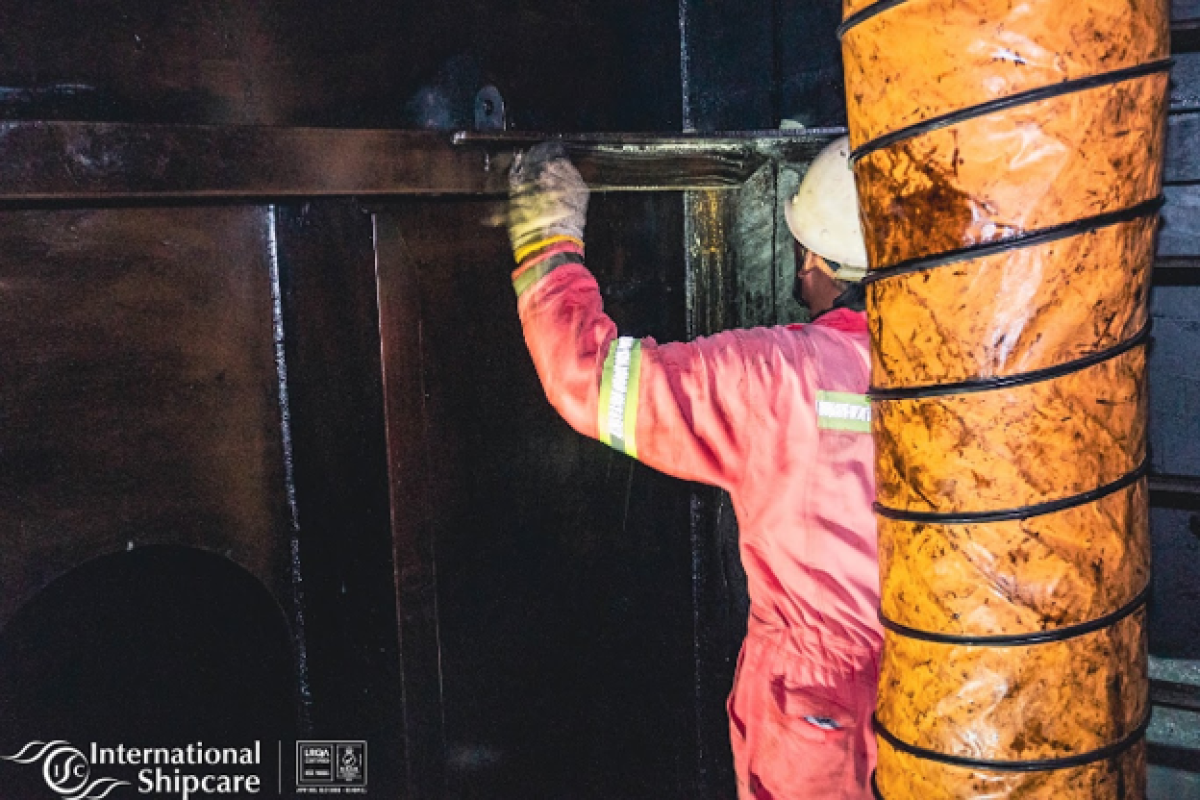
Key Takeaways
- Debunkering is the process of safely removing residual bunker fuel from a vessel’s tanks
- Tank cleaning typically follows debunkering to prepare tanks for inspection, gas-freeing, or a change in cargo/fuel type
- Both are commonly required before a vessel enters extended layup, goes to dry dock, or changes charter
- ISC carries out this work under the same enclosed-space entry management and permit-to-work systems used across its broader preservation and safety programme
What Is Debunkering?
Debunkering is the controlled removal of a vessel’s remaining bunker fuel — the fuel oil used to power the ship’s engines — from its tanks. It’s a standard step whenever a vessel is being prepared for an extended period out of active service, a change of fuel specification, or major technical work where residual fuel in the tanks would be a safety or operational risk.
Unlike routine bunkering (taking on fuel), debunkering requires careful planning: fuel has to be pumped out, tanks need to be assessed for remaining sludge or sediment, and the space has to be made safe before anyone can enter it.
Why Tank Cleaning Matters Before Layup
Once a tank is debunkered, it isn’t automatically safe to enter or ready for the next stage of a vessel’s life. Residual sludge, vapour, and sediment can remain even after the bulk fuel is removed — which is where tank cleaning comes in.
Before a vessel enters lay-up, tanks are typically cleaned and gas-freed so that:
- The vessel is in a safe, stable condition for the lay-up period
- Any required internal inspections can actually take place
- The vessel is ready for reactivation without a build-up of residue-related issues
- Enclosed spaces meet the entry standards required for ISC’s ongoing preservation and monitoring visits
This is detailed, unglamorous work — but it’s the kind of preparation that determines whether a vessel comes out of layup in the condition its owner expects.
Inside the Tank: What This Work Actually Looks Like
Most people never see the inside of a vessel’s tanks during layup preparation. A few moments from a real debunkering and tank cleaning project show what the process involves before anyone starts cleaning:
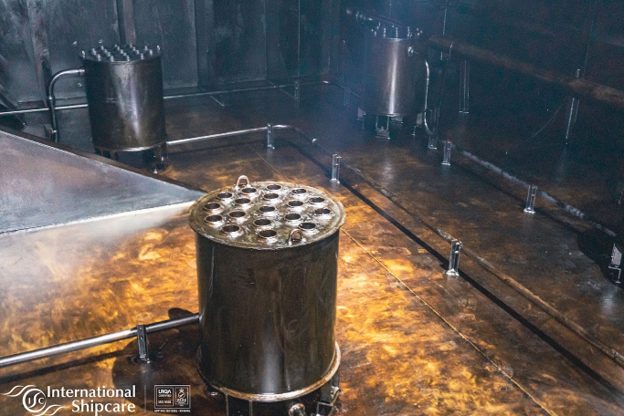
Residue and suction strainers. Before cleaning begins, the tank floor and internal piping are still coated in the amber-brown residue left behind after debunkering. The perforated cylindrical fittings on the tank floor are suction strainers — they protect the pump suction lines from debris while the tank is being stripped of fuel.
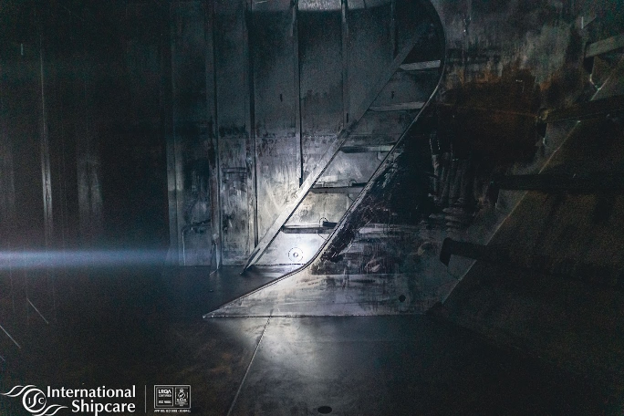
Getting into the tank. Entry is via internal ladders and stairways, lit only by portable lighting until the space has been tested and cleared for entry — a reminder of how confined and disorienting these spaces are before any cleaning work starts.
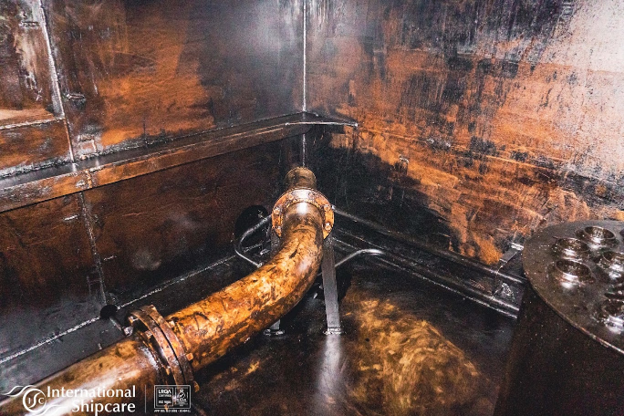
The pipework itself. A close-up of the tank’s internal suction line and flange fitting shows just how much residue clings to the pipework, not only the tank surfaces — which is why proper tank cleaning has to address more than what’s visible on the floor and walls.
How This Fits Into ISC’s Approach
Tank entry work — whether for debunkering, cleaning, or ongoing inspection — falls under the same safety framework ISC applies across its preservation and technical services. Tanks are posted with clear enclosed-space entry warnings — confirming oxygen levels and obtaining the
Master’s permission before anyone enters — backed by a permit-to-work system and monitoring by ISC’s technical team throughout the operation. Projects like this can run for several weeks, depending on the number and size of tanks involved and the vessel’s specific configuration.
FAQ
Is debunkering the same as tank cleaning?
No — they’re related but distinct steps. Debunkering removes the bulk fuel; tank cleaning addresses what’s left behind (sludge, sediment, vapour) afterward.
Why would a vessel need debunkering before layup?
Leaving residual fuel in tanks during an extended idle period increases the risk of degradation, sludge build-up, and complications during eventual reactivation — debunkering removes that risk before the vessel goes idle.
Preparing a Vessel for Layup?
Debunkering and tank cleaning are just one part of getting a vessel ready for a safe, well-managed lay-up period.
Learn more about ISC’s ship preservation programme or explore ISC’s full range of layup services.
Contact ISC to discuss your vessel’s requirements.
ABOUT US
OUR SERVICES
Careers