What Is Vessel Berthing? Process, Types, and Importance Explained
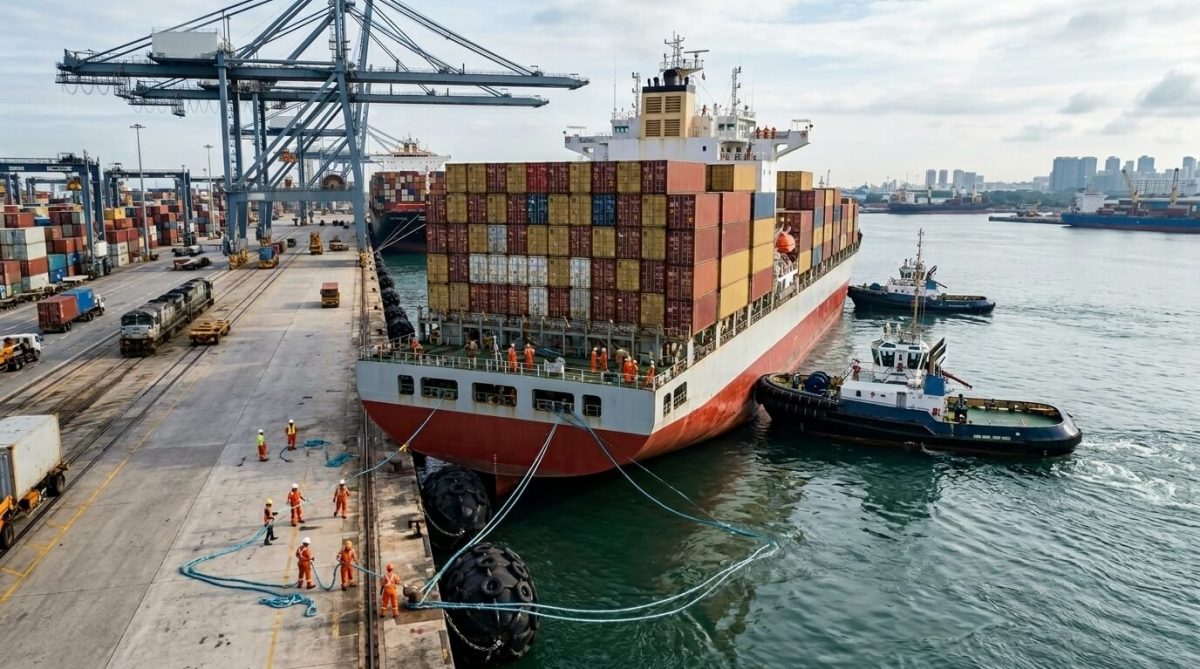
Key Takeaways
- Vessel berthing is the process of safely positioning a ship at a designated spot in a port, enabling cargo loading, unloading, and other operations.
- It is a critical step in maritime logistics, requiring coordination between the vessel, port authorities, and terminal operators.
- Efficient berthing improves port productivity and reduces delays, making it essential for global trade and shipping operations in Malaysia.
What actually happens when a ship arrives at a port, and how does it safely “park” before cargo operations begin?
In the maritime industry, this process is known as vessel berthing—a fundamental operation that ensures ships can dock safely and efficiently. While it may appear simple from a distance, berthing is a highly coordinated and technical process involving navigation, port infrastructure, and operational planning.
For Malaysia, a key maritime hub in Southeast Asia, understanding vessel berthing is especially important. Ports such as Port Klang, Tanjung Pelepas, as well as strategic offshore locations like Labuan and Brunei Bay, rely on efficient berthing to support international trade, logistics, and offshore services.
This article provides a comprehensive explanation of what vessel berthing is, how it works, and why it matters.
What Is Vessel Berthing?
Vessel berthing refers to the process of guiding and securing a ship into its designated position at a port, typically alongside a quay, pier, or dock, so that cargo operations or passenger handling can begin.
In simple terms, a berth is like a “parking space” for ships, while berthing is the act of safely manoeuvring the vessel into that space.
This process is essential because ships cannot simply stop anywhere—they must be positioned precisely to:
- Ensure safety
- Allow loading and unloading
- Enable access to port facilities
Why Vessel Berthing Is Important
Vessel berthing plays a crucial role in the global shipping and logistics ecosystem.
1. Enables Cargo Operations
Once a vessel is berthed, it can begin:
- Loading exports
- Unloading imports
- Transferring goods efficiently
Without proper berthing, cargo handling cannot take place.
2. Ensures Port Efficiency
Efficient berthing reduces:
- Waiting time for ships
- Port congestion
- Operational delays
Studies show that berthing time directly impacts supply chain efficiency and delivery timelines.
3. Supports Safety and Stability
Berths are designed to:
- Secure vessels during operations
- Protect infrastructure
- Prevent collisions or accidents
Proper berthing ensures both vessel and port safety.
How Vessel Berthing Works
Berthing is a step-by-step process involving coordination and precision.
Step 1: Arrival at Port
When a ship arrives near a port, it:
- Waits at anchorage (if required)
- Receives instructions from port authorities
Step 2: Berth Allocation
The port assigns a specific berth based on:
- Vessel size
- Cargo type
- Availability
Each berth is a designated location for mooring vessels.
Step 3: Navigation and Manoeuvring
The vessel is guided towards the berth using:
- Tugboats
- Pilot assistance
- Navigation systems
This stage requires precise control, as large ships must manoeuvre in confined spaces.
Note: Manoeuvring in a vessel refers to the controlled movement and handling of a ship or boat to change its direction, speed, or position safely and accurately.
Step 4: Mooring
Once in position, the ship is secured using ropes and mooring equipment.
Additional systems such as fenders help absorb impact and prevent damage during berthing.
Step 5: Cargo Operations Begin
After securing the vessel:
- Loading and unloading activities start
- Customs and inspections are carried out
- Maintenance or refuelling may take place
Types of Vessel Berthing
Berthing can be classified based on structure, purpose, and cargo type.
1. By Structure
Solid Berths
- Built with solid quay walls
- Suitable for heavy cargo operations
Open Berths
- Supported by piles
- Offer flexibility but lower load capacity
2. By Location
Alongside Berths
- Located directly next to the dock
- Most common type
Offshore Berths
- Located away from the shore
- Used for oil, gas, or hazardous cargo
3. By Cargo Type
Different berths are designed for specific cargo:
- Container berths – for container ships
- Bulk berths – for raw materials like coal or grain
- Liquid berths – for oil and gas
- General cargo berths – for mixed goods
4. Specialised Berths
- Lay-up berths – for idle vessels
- Marina berths – for leisure boats
- Temporary berths – for short-term waiting
Factors Affecting Vessel Berthing
Several factors influence how easily and efficiently a vessel can berth.
1. Vessel Size and Type
Large ships require:
- Deeper water
- Longer berths
- Specialised handling equipment
2. Weather Conditions
Wind, waves, and tides can affect:
- Manoeuvrability
- Safety
- Timing of berthing
3. Port Infrastructure
Ports must have:
- Adequate berth capacity
- Proper equipment
- Efficient layout
4. Traffic and Congestion
Busy ports may experience:
- Delays in berth allocation
- Longer waiting times
5. Skill and Coordination
Successful berthing depends on:
- Ship crew expertise
- Pilot guidance
- Communication with port authorities
Vessel Berthing in Malaysia
Malaysia is one of Southeast Asia’s key maritime hubs, making vessel berthing highly relevant.
Key Malaysian Ports:
- Port Klang
- Port of Tanjung Pelepas
- Penang Port
- Labuan
- Brunei Bay
These ports handle:
- Container shipping
- Bulk cargo
- Oil and gas operations
Efficient berthing is essential to:
- Maintain trade flow
- Support logistics operations
- Enhance port competitiveness
Berthing vs Docking vs Mooring
These terms are often used interchangeably but have different meanings.
| Term | Definition |
|---|---|
| Berthing | Positioning a vessel at a designated port location for operations |
| Docking | Bringing a ship alongside a dock or into a dry dock |
| Mooring | Securing a vessel in place using ropes, anchors, or mooring systems |
Common Challenges in Vessel Berthing
Despite its importance, berthing can present challenges.
1. Port Congestion
High traffic can delay berth availability.
2. Weather Conditions
Storms or strong currents can affect safety.
3. Limited Infrastructure
Older ports may lack modern facilities.
4. Operational Delays
Coordination issues can slow down operations.
Why Vessel Berthing Matters for Businesses
For businesses involved in shipping, logistics, or offshore services, berthing directly impacts:
- Delivery timelines
- Operational costs
- Supply chain reliability
Efficient berthing ensures:
- Faster cargo handling
- Reduced waiting time
- Lower operational risks
Conclusion: Understanding Vessel Berthing in Modern Shipping
Vessel berthing is a fundamental process in maritime operations, enabling ships to safely dock and carry out essential activities such as cargo handling and maintenance.
From port efficiency to global trade, berthing plays a vital role in ensuring smooth logistics operations—especially in maritime-focused economies like Malaysia.
By understanding how vessel berthing works, businesses and stakeholders can better navigate shipping processes, reduce delays, and improve overall efficiency.
Looking for Reliable Maritime and Vessel Support Services?
If your operations involve shipping, offshore logistics, or vessel management, working with experienced service providers is essential.
Partner with professionals who understand vessel berthing operations, port coordination, and marine logistics to ensure smooth, efficient, and safe operations every time.
If your operations involve shipping, offshore logistics, or vessel management, working with experienced service providers is essential. ISC supports vessel owners with anchorage services, vessel layup, and full layup management at Brunei Bay.
Frequently Asked Questions — Vessel Berthing
What is the difference between vessel berthing and mooring?
Vessel berthing refers to the overall process of positioning a ship at a designated location within a port, typically alongside a quay, pier, or dock, so that cargo or passenger operations can begin. Mooring is one part of that process — the act of securing the vessel in place using ropes, anchors, or mooring systems once it has been positioned.
What is the difference between vessel berthing and anchorage?
Berthing involves bringing a vessel directly alongside a fixed structure such as a quay or pier for cargo operations, maintenance, or passenger handling. Anchorage, by contrast, is a designated waiting area where a vessel remains offshore — often while awaiting berth availability, customs clearance, or further instructions — without being secured to port infrastructure.
How long does vessel berthing typically take?
Berthing duration depends on vessel size, weather conditions, port congestion, and pilot/tugboat availability. Smaller vessels in favourable conditions may berth within 30–60 minutes, while larger vessels navigating congested or weather-affected ports can take significantly longer.
What factors can delay vessel berthing?
Common causes of berthing delays include port congestion, adverse weather (wind, waves, tides), limited berth availability for the vessel’s size or cargo type, and coordination issues between the vessel, port authorities, and terminal operators.
Is a lay-up berth the same as a regular cargo berth?
No. A lay-up berth is a specialised berth type designed for vessels that are temporarily withdrawn from active service, rather than for loading or unloading cargo. Vessels in lay-up require different considerations — including longer-term mooring arrangements and access for ongoing preservation and inspection — compared to a standard cargo or container berth.
ABOUT US
OUR SERVICES
Careers